How to Build a Daily Word Puzzle Habit
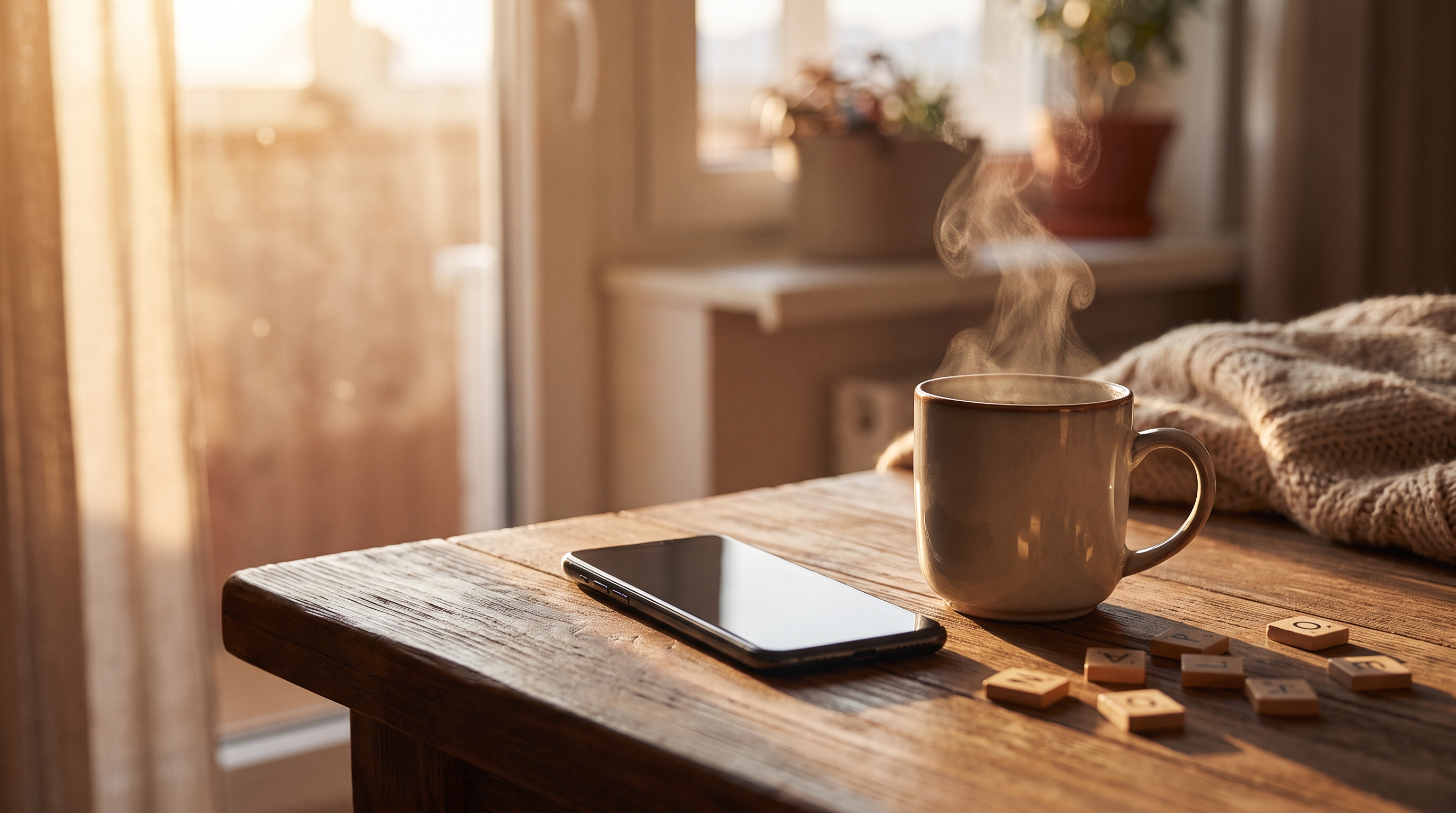
You've tried a daily word puzzle before and it fell apart within a week. Maybe the guess-a-letter game bored you. Maybe the crossword made you feel like you'd skipped every trivia class for a decade. The advice doesn't help much either, because the puzzle world splits into two poles: letter-guessing on one side, knowledge-testing on the other. What you actually need is something in the middle, and a routine that survives a bad week. This is about both. Playclume built Clume for that middle space, but the puzzle only works if the habit holds. So build the habit first.
Why Daily Puzzles Stick
Most people quote a tidy number for how long a habit takes to form, and it's wrong. The real research found something messier. A 2010 University College London study by Phillippa Lally found habits take 66 days on average to become automatic, with a range from 18 days to over 250 days. The range matters more than the average. Your puzzle habit might lock in after 18 days, or it might take most of a year. The mechanism is the same either way.
The habits that stuck in that study were anchored to something the participants already did, not to a clock time. "After coffee, one puzzle" beats "puzzle at 7 a.m." because the coffee happens whether or not you remember. The formula is easy to write down: after your current habit, you do the new one. That's the most reliable way to build any habit, linking it to an existing one.
The friction point is smaller than you think. The hardest part is the first minute. Just the act of opening the puzzle and starting. Shrink that first minute to nothing and the rest follows.
What Wordle Taught Us About Habit Formation
Wordle is the clearest habit-formation case study of the last few years, and it did almost nothing a "habit app" would do. The game offers one puzzle per day, with the same word for every player anywhere in the world. One puzzle, clear rules, and a limited time commitment: that's the entire design. There's no feed to binge and no reason to check back before tomorrow.
The numbers are almost hard to believe. Wordle went from 90 daily players at the start of November 2021 to 300,000 by the start of 2022, then 2 million soon after. None of that was bought. Wordle's growth relied on organic sharing rather than paid promotion. People posted their results because the game gave them something to post.
The game asks almost nothing of you. Cognitive psychologist Johnathon King put it plainly: playing Wordle is unlike a crossword because you don't need to know the meanings of words or even have a large vocabulary. You need letters, not knowledge, which is also why a confident guess can still be wrong. That accessibility is why the game became a daily ritual for millions of users , and why starting the day with it turns into a mental habit that expands your vocabulary over time.
How to Build Your Own Word Puzzle Routine
The routine has five parts, and none of them ask for willpower.
Start with one puzzle, not a menu. The hardest part is the first minute , and a menu of ten options adds decisions to that first minute. Pick one puzzle and bookmark it, or put a shortcut on your home screen, so there's nothing to choose. The less you think about starting, the more likely you are to start.
Anchor it to a moment you already have. Morning coffee, lunch, the last thing before bed instead of the feed. Habits stick when they connect to something you already do , and anchoring to a behavior beats anchoring to a clock time. Write it as a stacking formula: after [your existing habit], I will [solve one puzzle].
Keep the session short, five to ten minutes. The goal is showing up, not marathon solving. End while you still feel like you could do one more. Small wins build the momentum that carries you to tomorrow.
Track the streak, not the outcome. Some days you won't solve the puzzle. That's fine. The reward is that you showed up. A streak is just a count of the days you did the thing, and when the routine is consistent, the skill follows on its own.
Rotate, but slowly. Variety keeps it fresh; too many options derail the routine. One daily puzzle as your anchor, one rotating favorite, and a short puzzle for the busy days.
Beyond Wordle: Finding Your Puzzle
Wordle isn't the whole landscape, and it doesn't fit everyone. If letter-guessing leaves you cold and crosswords demand trivia you don't have, there's room in the middle.
A word search is the lowest-friction entry point. Scanning rows and columns of letters trains your eyes to recognize patterns, sharpens focus, and gives a small but real rush every time you spot a hidden word. It's a great starting point if you're new to puzzles, and a reliable daily ritual if you're already a regular.
None of this is trivial for your brain. Word and puzzle games improve problem-solving skills, provide stress relief, grow vocabulary, improve mental agility, and build confidence. Activities that challenge your brain build mental resilience and may even slow cognitive aging.
Here's how the three formats compare:
| Format | What it demands | Where it falls short |
|---|---|---|
| Wordle | Letter-guessing; no large vocabulary required | Letters, not clues |
| Crossword | Vocabulary and general knowledge | Punishes a small vocabulary |
| Word search | Pattern recognition and focus | Little deduction |
That leaves the middle space the two big formats never covered. Clume, Playclume's word game, sits between letter-guessing and trivia. You work from clues, connecting them to narrow down the word, rather than shuffling consonants or recalling a fact you either know or don't. If Wordle asks "what letters fit" and a crossword asks "what do you know," Clume asks "what do the clues point to."
One Puzzle at a Time
A daily word puzzle is a fixed point in a day that otherwise refuses to hold still. The appeal isn't new. The New York Times spent the 1920s sneering at crosswords, dismissing them as "a primitive sort of mental exercise," then caved and printed one in 1942. What hooked people wasn't the grid itself. It was the dailiness: same chair, same coffee, same few minutes of ordered thinking before the rest of the day.
You don't need the hardest puzzle available. You need one puzzle, one anchor, and a streak you refuse to reset over a single missed day. Habits take 66 days on average , and the people who fail aren't the ones who miss a day. They're the ones who miss a day and decide the whole thing was ruined.
Start today. Pick Clume or a word search or Wordle, anchor it to your coffee , and solve one. Sixty-six days from now, give or take, you won't be deciding to do this anymore.