One Puzzle a Day: Why the Daily Puzzle Game Sticks
Most brain-game apps hand you an endless feed of puzzles, and most of them get abandoned within a week. The one-puzzle-a-day format has the opposite track record: people keep it up for months and years. The reason is not that a daily puzzle trains your brain better. The limit itself is doing the work.
The short version: a single daily puzzle sticks because it's scarce, not because it sharpens your memory. The one-a-day limit sets off anticipation, unpredictable rewards, and an itch to finish what's unfinished. The science on brain training is thin, but the science on habit formation is not.
The One-Puzzle Limit Is the Feature
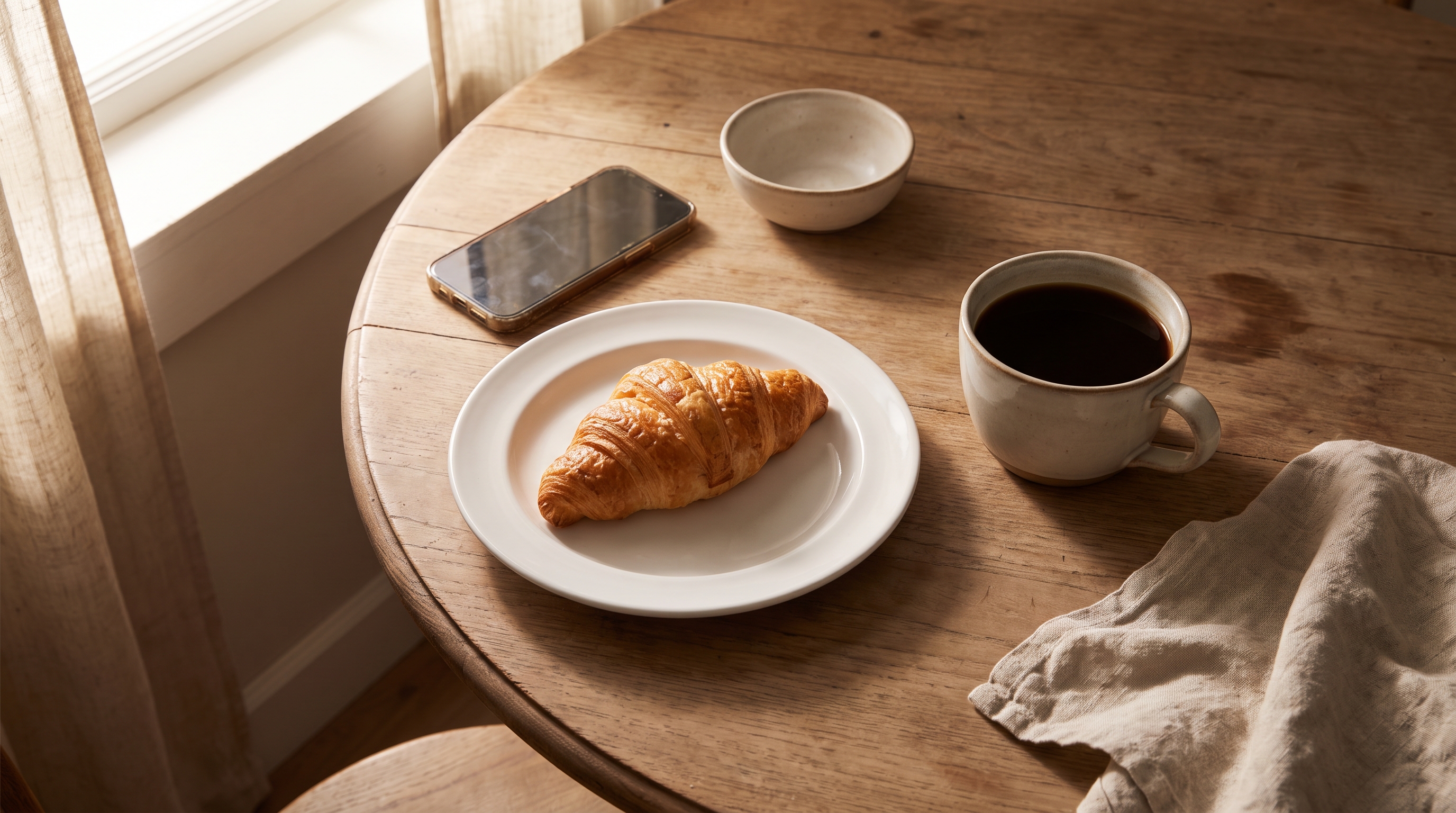
Josh Wardle, who created Wordle, called it "the croissant principle." Asked why the game serves only one puzzle a day, he compared it to a French bakery: you don't eat the whole tray of croissants, you eat one, enjoy it fully, and look forward to tomorrow's.
The limit works because of scarcity. Humans value scarce things more than abundant ones, a finding so well established in psychology that it's treated as close to a law. One puzzle a day produces three effects at once. Anticipatory pleasure: knowing tomorrow's puzzle is coming creates a low-level excitement all day. Enhanced savoring: because you get one shot, each guess feels more meaningful. Loss aversion: missing a day means genuinely losing something, your streak, and that feels worse than the equivalent gain.
Unlimited games hit the opposite problem, habituation. When you can play all day, no single round is special, so none of them hold your attention. The limit turns a commodity into an event.
What Your Brain Does During a Puzzle
Steven Pinker calls it "the optimal level of reward." The puzzle is hard enough to require concentrated thought, but not so hard it leaves you frustrated most of the time. That narrow band is the whole game: too easy and it's boring, too hard and you quit.
Solving a word puzzle engages several brain regions at once: the visual word form area, which reads the letters; Wernicke's area, which handles word sounds; the dorsolateral prefrontal cortex, your working-memory scratch pad; and the frontal poles, which hold the abstract goal in mind.
The payoff is the aha moment when a guess clicks. It's a small reward, but it arrives fast and it's earned, and that matters more than its size.
Four Mechanisms That Make Daily Puzzles Addictive
The first is the variable reward schedule. B.F. Skinner found that rewards arriving unpredictably create stronger behavioral patterns than consistent ones. Slot machines use this, your email inbox uses it, and so does Wordle.
The second is the Zeigarnik effect, our tendency to remember and fixate on incomplete tasks more than completed ones. Each unused row in a word grid is an incomplete task. When you solve or fail today's puzzle, that tension doesn't vanish. It transfers to tomorrow's puzzle, which your brain files away as pending.
The third is social proof. Everyone solves the same puzzle on the same day. Social psychologist Matthew Baldwin explains that this shared experience, all of us working toward the same goal at the same time, creates a common in-group goal, and shared experiences are amplified. The format scaled this into the billions: Wordle was played 4.8 billion times during 2023.
The fourth is identity. "I'm a Wordle player" joins "I'm a morning runner" in your self-concept, and identity-based habits are dramatically more persistent than goal-based habits.
Puzzles Don't Train Your Brain, and That's Fine
No evidence shows that word and logic puzzles prevent accelerated brain aging or cognitive decline on their own. Neuropsychologist Justin Miller at UW Medicine plays Sudoku, chess, crosswords, and Wordle himself, and he's transparent about exactly this.
The problem has a name: the generalizability problem. Skills learned playing a game don't broadly transfer beyond the game. You can get great at the game without any impact outside it.
That doesn't make puzzles useless. Doing hard puzzles builds comfort with problem-solving: you learn that even when a solution isn't obvious, there are ways to look at the information differently until an insight arrives, and you develop an intuition for when to step away and return with fresh eyes. A short, lightly challenging puzzle also gives memory and focus a small boost through novelty and an immediate payoff.
What Actually Works for Long-Term Brain Health
If long-term brain health is the goal, the evidence points elsewhere. Learning new skills, not repeating the ones you already have, fosters new neural connections through neuroplasticity. Reinforce those networks earlier in life and your brain builds the ability to adapt if a disease like Alzheimer's arrives later.
Social connection is part of it too. A National Institute on Aging analysis found that loneliness increases dementia risk by 31%.
| What you do | What the evidence says |
|---|---|
| Repeating the same word or logic puzzle daily | No evidence it prevents cognitive decline on its own |
| Learning a genuinely new skill | Builds new neural networks through neuroplasticity |
| Staying socially connected | Loneliness raises dementia risk by 31% |
A daily puzzle fits here as one small piece, not a replacement. The habit you build solving one puzzle with the same people each day is as much about the group as the puzzle.
Why Deduction Puzzles Add a Second Layer
Wordle's structure rewards letter elimination. You guess, letters flip, and the answer narrows. Clume, the daily puzzle game from Playclume, works differently: it's a deduction challenge where you connect clues rather than know words.
That changes the reward schedule. Instead of one variable reveal, you get a variable reward at the clue level and another at the puzzle level, so the slot-machine pull B.F. Skinner described fires twice per session.
The Zeigarnik effect now fires at two levels too. You're stuck on a single clue, an incomplete task, while the full puzzle sits unfinished above it. Solving one clue releases a little tension and hands you the next incomplete step, the same itch that pulls you back tomorrow.
The practice also transfers differently. Connecting clues rather than knowing words means you work on something apart from the vocabulary recall that word games build. You practice looking at puzzling information in different ways until an insight arrives, which is the comfort with problem-solving that hard puzzles develop.
That's the case for the one-a-day format in a single line: the limit keeps it scarce, the clues keep it varied, and the incompleteness keeps you coming back. Playclume is built on exactly that structure, one deduction puzzle a day.